

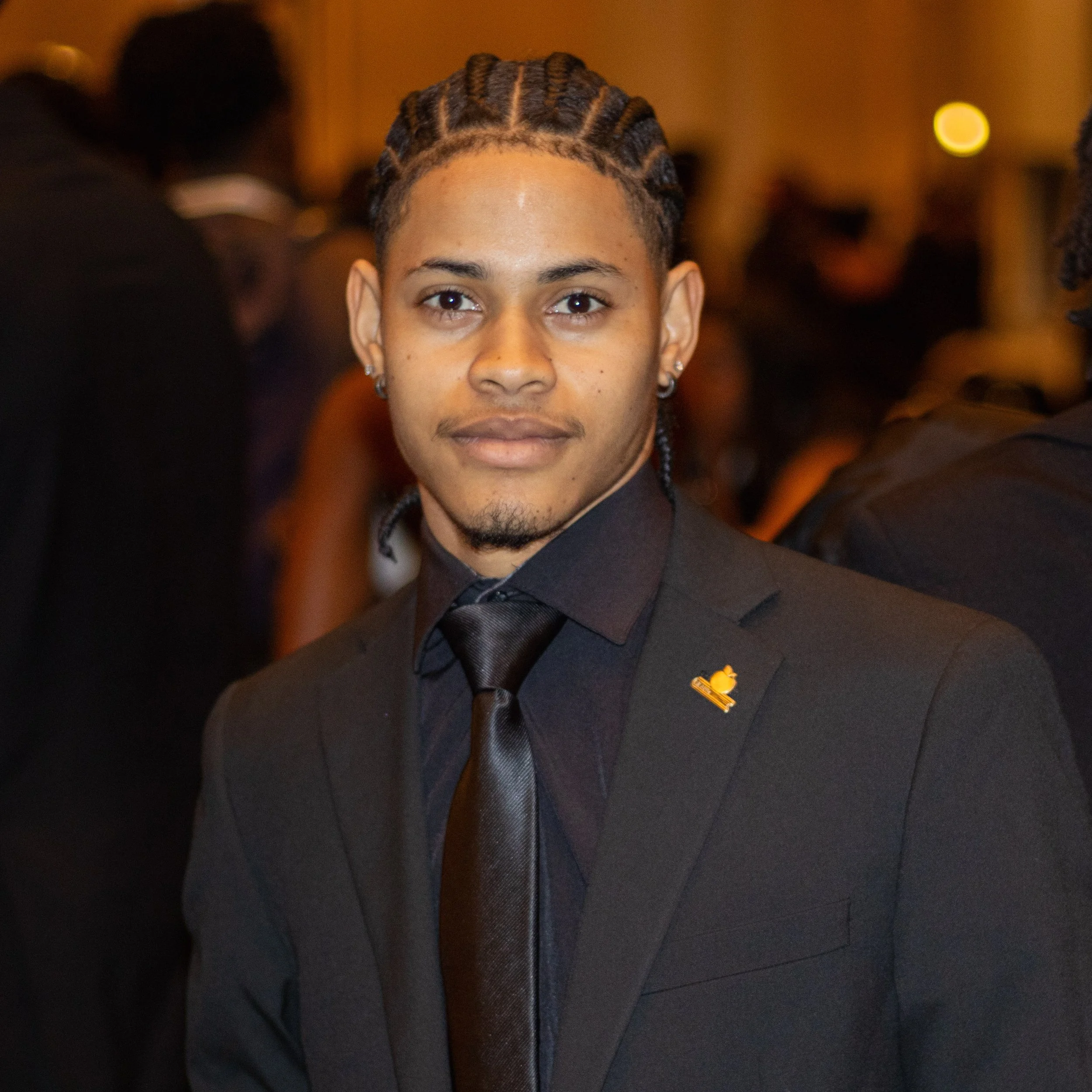
Rakeem McFarlane
Patti Grace Smith Fellow, Class of 2026
Massachusetts Institute of Technology, Aerospace Engineering, ‘28
Host Institution: Relativity
Rakeem is a sophomore undergraduate aerospace engineering student at the Massachusetts Institute of Technology, with a minor in Computer Science. He has a strong interest in autonomous systems and sustainable aviation and space technologies, which was shaped by his upbringing in Carriacou, Grenada. His career objective is to use both his technical training and lived experience growing up in a Small Island Developing State to contribute to clean energy and humanitarian-focused aerospace solutions. He aims to work at the intersection of aerospace engineering and social impact, developing technologies that improve disaster response, increase flight efficiency, and strengthen resilience in vulnerable communities. He aspires to shape the future of aerospace in ways that ensure innovation benefits both people and the environment.
At MIT, he pursues opportunities that reflect his values through both research and hands-on projects. He conducts undergraduate research in the Bioinstrumentation Lab within the Department of Mechanical Engineering, where his work focuses on improving the stability and performance of aerial systems used in complex environments. He also previously worked in the MIT Media Lab’s Camera Culture Group, where he contributed to research exploring how sensing and perception can help autonomous systems better understand and respond to their surroundings.
Beyond academics, he is deeply committed to education, mentorship, and community engagement. He spent several years teaching math and science, founded a STEM club, and planned and executed a robotics and wind energy summer program for high school students in Grenada, Carriacou, and Jamaica through the MIT PKG Center. Through these efforts, he aims to expand access to hands-on STEM education and help students from underrepresented communities see engineering as a tool they can use to address challenges in their own environments.
He plans to continue developing his skills throughout his academic career and intends to enter the industry after graduation, working in aerospace roles that emphasize sustainability, autonomy, and social responsibility. Ultimately, he hopes to contribute to a future where aerospace innovation balances both pushing technological boundaries and creating meaningful, lasting impact for communities around the world.